
Review · SPAIN
Jerez de la Frontera: Andalusian Horse Dance and Museums
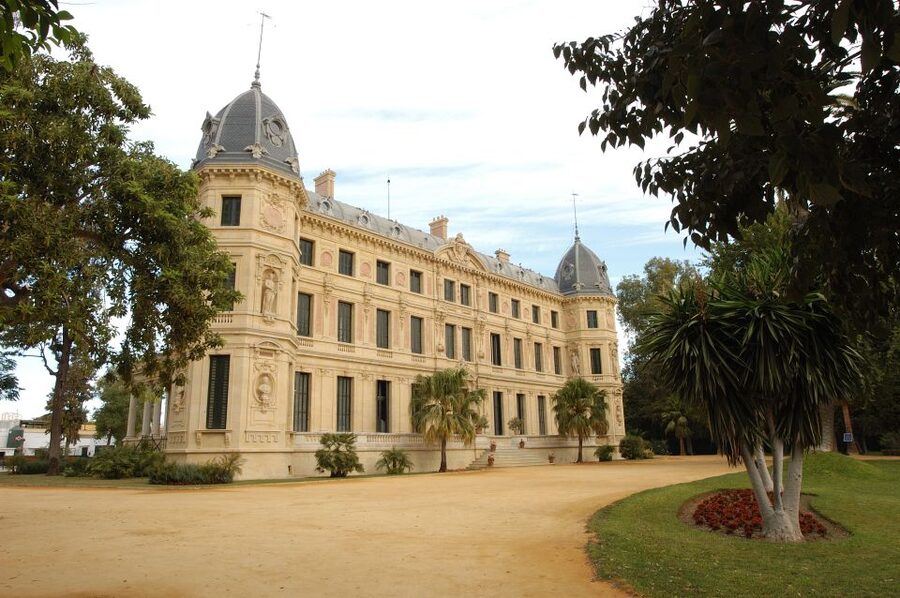
The main event is a beautifully controlled 90-minute equestrian ballet at Jerez’s Royal Andalusian School of Equestrian Art. Andalusian horses perform piaffe, passage, pirouettes, Spanish walk, airs above the ground, and carriage work to Spanish music while riders wear 18th-century style costumes. I especially like the chance to watch horses being trained before the show, and the fact that the ticket also covers the Art Equestrian and Carriage Museums.
The setting is lovely, with gardens and a 19th-century palace, and the staff generally make ticket exchange easy. The main drawback is timing: the museums and saddlery close at different hours, some palace areas close on Saturdays and public holidays, and the arena seating can be uncomfortable for a 90-minute performance.
Key points to know before you go
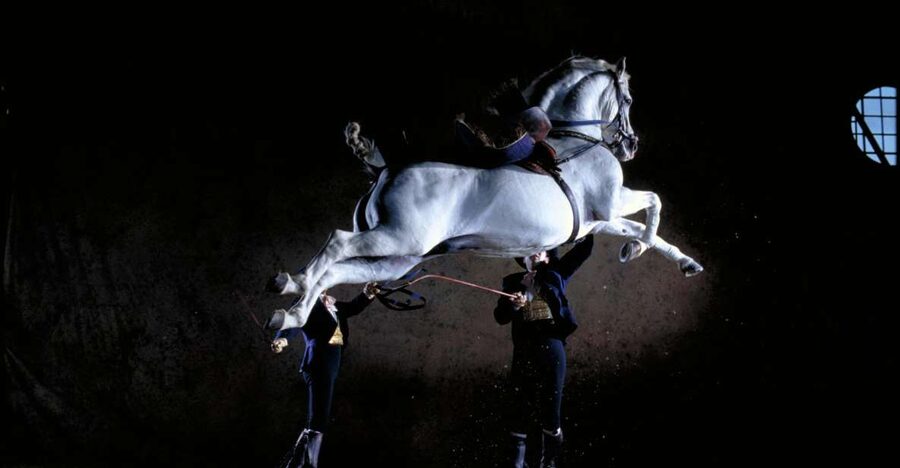
- The horse ballet lasts from noon to 1:30 p.m. and features six to eight choreographies, including Pas de Deux, Passage and Piaffe, and Airs Above the Ground.
- Arrive early for the museums and training areas. The Art Equestrian Museum is open from 10 a.m. to 2 p.m., while the Carriage Museum runs until 3 p.m.
- The show is about control, not speed. You will see precise dressage movements, traditional Spanish riding, carriage driving, and group formations.
- The $38 price is strong value if you visit the museums and palace grounds as well as the performance.
- Photography and video are restricted. Cameras are listed among the prohibited items, so plan to watch rather than record.
- Bring your passport or ID card and exchange your ticket at the school’s ticket office on arrival.
Why the Andalusian horses are the main attraction
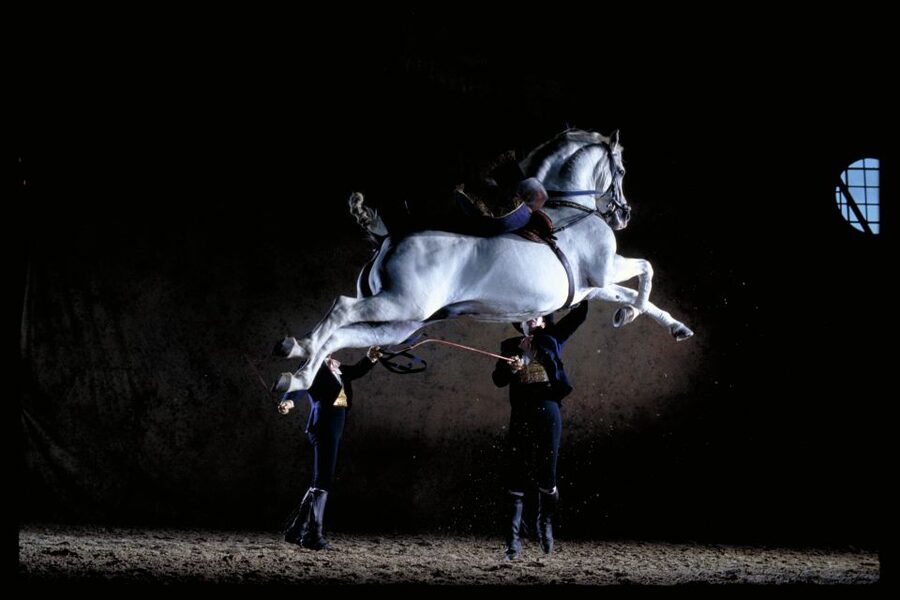
The horses are not simply parading around a ring. Their movements come from classical dressage, Doma Vaquera, traditional farm work, and the old European Haute École tradition. You will see the animals lift their feet with great precision, move sideways, collect their stride, and respond to small signals from the rider.
The show uses several choreographies, usually six to eight in one performance. The program can include The Colts, Airs on Horseback, Pas de Deux, Passage and Piaffe, Domino on Horseback, Airs Above the Ground, and Fantasy. The exact order or selection may vary, but the structure gives the performance a good rhythm.
Some sections are quiet and elegant. Others are more athletic, with levades, caprioles, courbettes, and other high-level movements. I find the contrast important. It shows that the school is not presenting one repeated trick. It is showing different kinds of communication between horse, rider, and carriage.
The horses perform to classical and Spanish music, with riders in traditional costumes. That combination gives the program a formal, almost theatrical quality, but the skill remains the focus. If you already know dressage, you will appreciate the technical detail. If you do not, you can still follow the basic pleasure of watching an animal respond so closely to its rider.
More Horse Shows in Spain:
- Jerez: Royal Andalusian School of Equestrian Art Admission
★ 4.6 · 882 reviews - Cadiz: Andalusian Horses and Bulls Country Show
★ 4.6 · 189 reviews - Torremolinos: Spanish horse and flamenco show
★ 4.5 · 162 reviews
Begin with the palace grounds and audiovisual presentation
The entrance is through the Visitor Reception Centre, where you exchange your ticket at the ticket office. If you arrive early enough, an audiovisual presentation is available until 11 a.m. It explains the development of equestrian art in Andalusia and the work of the school.
This short film is useful because it gives you a framework before the museums and show. I would not treat the morning presentation as an optional extra if you have time. It helps explain why the performance includes both refined dressage and practical Spanish riding traditions.
From the reception area, you enter the gardens. The gardens contain many exotic plants and provide a pleasant pause before the indoor exhibits. The palace rises above them in 19th-century style, giving the site more character than a simple modern arena.
The palace is included, but its opening schedule matters. It is closed on Saturdays and public holidays, as is the saddlery. If those areas are important to you, check the date before booking and plan around the listed opening hours.
Watch the horses being prepared and trained
One of the most rewarding parts of the visit can happen before the formal show. Several people were especially pleased to see horses warming up, being groomed, or working in the training areas. You may be able to observe young equestrians schooling horses and see the quiet preparation behind the polished performance.
This is where the show becomes easier to understand. The arena presentation is carefully choreographed, but the training areas reveal the daily work required to produce that control. You can see the horses being prepared and, in some cases, get close enough to give them attention in the stables.
Access and timing can vary, so do not assume every behind-the-scenes area will be open in exactly the same way on every date. One additional behind-the-scenes training option has been described as available for an extra charge, so check whether it is offered when you book.
I would allow enough time to find the stables and training areas. The directions between parts of the complex have not always been clear, and one route may send you outside along the main street. Clear signs help in some places, but you might still need to ask staff at different entrances.
The Art Equestrian Museum explains the tradition
The Art Equestrian Museum occupies 11 rooms in the palace basement. It traces the origins and development of the horse in Andalusia and explains how equestrian art became part of the region’s culture.
You will find displays about riding, equipment, training, and the relationship between horse and rider. Film clips and written explanations are available in Spanish and English, which makes the museum useful even if you do not know much about dressage.
I like this part of the visit because it slows the pace. The show can leave you focused on movement and spectacle, while the museum explains the tools and traditions behind it. It also gives non-riders a better chance to understand why a piaffe or Spanish walk requires such discipline.
The museum is open from 10 a.m. to 2 p.m. That schedule makes a morning arrival sensible. If you arrive shortly before the noon show, you can see the museum, but you may have to hurry. Give yourself at least 30 to 45 minutes if you want to read the displays rather than simply walk through.
More horseback rides around Spain:
- El Salobre: Horse Riding Adventure with Transfer Options
★ 4.5 · 2,034 reviews - Mallorca: Horseback Riding Experience with Food Options
★ 4.6 · 1,424 reviews - Jerez: Yeguada de la Cartuja Carthusian Horses Tour
★ 4.8 · 970 reviews - Tenerife: Horseback Ride with Instructor
★ 4.4 · 836 reviews
See the saddlery and the working equipment
The saddlery shows where harnesses are made and repaired. This is a practical part of the school, and it adds useful context to the carriage demonstrations later in the day.
The school’s equestrian tradition depends on more than the horse’s training. Saddles, bridles, harnesses, carriages, and costumes all help create the finished performance. Seeing the equipment being made or maintained makes the polished show feel less like a standalone spectacle.
The saddlery is closed on Saturdays and public holidays, so do not count on it as part of your visit without checking the date. This is one of the small schedule details that can affect the value of the ticket.
The Carriage Museum is a strong second act
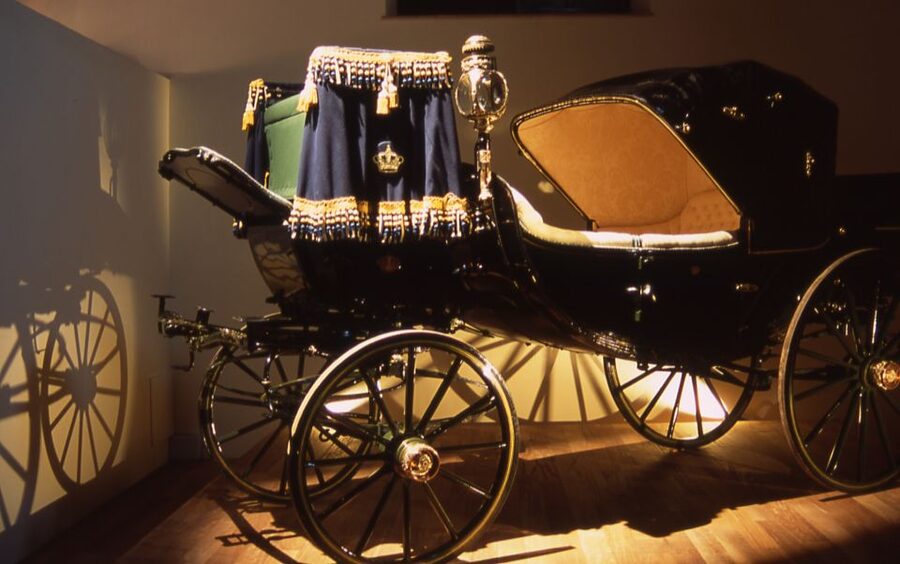
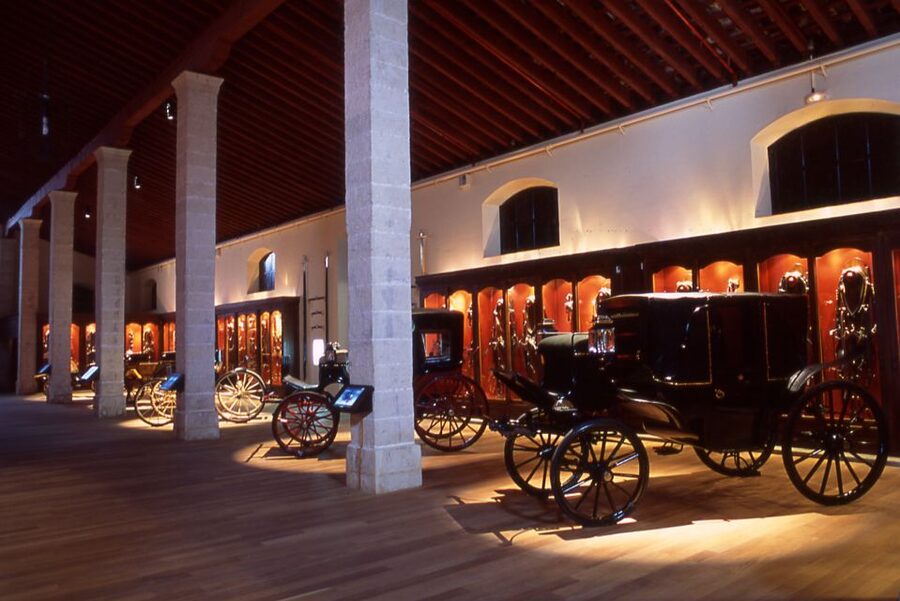
The Carriage Museum is the final major stop and one of the best reasons to arrive early. It displays historic vehicles, classical harnesses, and equestrian costumes. The carriages began as transport, but they now appear in sport and public exhibitions.
The collection gives you a close look at the elegance and mechanics of carriage travel. You can see how much work goes into the harnesses and how the coachmen control a team of horses with skill and restraint.
The carriage work in the show connects directly to this museum. During the performance, coachmen demonstrate their ability to drive carriages in controlled patterns. The museum lets you look at the vehicles at a slower pace and notice details you might miss from the arena.
Photography rules are strict. The activity information lists cameras and video recording among the prohibited items, and you should be prepared to leave your camera behind. Several people wished they could photograph the carriages, but the no-camera rule also keeps the rooms calmer and lets you pay attention to the objects.
The Carriage Museum is open from 10 a.m. to 3 p.m., giving it the latest closing time among the main exhibits. That makes it a good final stop after the performance, although the entire site may be closing by mid-afternoon.
What happens during the 90-minute show
The performance begins at noon and ends at 1:30 p.m. Take your seat a little early, especially if you want time to settle in. The arena provides good views from all seats, although comfort is more mixed. Some people found the seating quite hard, while others liked the legroom and row spacing.
The opening sections may feature younger horses or more basic schooling movements. These provide a gentle introduction before the most demanding work. The show then builds toward paired routines, carriage demonstrations, and advanced exercises performed by individual horses or groups.
A Pas de Deux pairs two horses and riders in a carefully matched routine. Passage and piaffe show the horses working in collected movement, with the feet lifting and placing in a steady rhythm. The Spanish walk gives the performance its most instantly recognizable flourish.
The Haute École sections can include levades, in which the horse raises its front end, as well as caprioles and courbettes. These movements require strength, balance, timing, and trust. They are short, precise moments rather than stunts repeated for easy applause.
The carriage work changes the visual scale of the show. Instead of watching one horse and rider, you watch a coachman manage a vehicle and team. The traditional harnesses and formal costumes make this section feel tied to older Spanish transport, even though the activity is now mainly for sport and display.
The finale brings horses and riders together in group formations. This is a fitting finish because it shows the school’s central skill: many animals and riders moving as one unit without losing precision.
Music, costumes, and Spanish riding traditions
The music is not background decoration. It sets the pace and mood of each section. Classical pieces support the more formal dressage work, while Spanish music reinforces the local character of the show.
The costumes also matter. The riders wear clothing based on 18th-century styles, giving the performance a link to older courtly and working traditions. The result is more culturally specific than a generic horse show.
Doma Vaquera adds another Spanish element. This riding style developed from the work of cattle herders, and its movements differ from the controlled elegance of formal dressage. You may also notice touches associated with bullfighting traditions, though the show is presented as an equestrian performance rather than a bullfighting event.
The performance is particularly rewarding if you like horses, riding, or Spanish culture. You do not need technical knowledge to enjoy it, but a little curiosity helps. Watch the riders’ hands, posture, and legs rather than focusing only on the horse’s dramatic steps.
Is $38 a fair price?
At $38 per person, I consider this a good value for a 3.5-hour visit, provided you use the included admissions. The price covers the 90-minute show, the audiovisual presentation, the palace when open, the Art Equestrian Museum, the Carriage Museum, and the saddlery when open.
The value is weaker if you arrive just before noon and see only the performance. The horse ballet is the main reason to come, but the museums and grounds explain what you are watching and make the ticket feel like a half-day cultural visit rather than a single staged event.
There are also practical savings built into the booking. You can reserve now and pay later, and cancellation is free up to 24 hours in advance for a full refund. Those terms are helpful if your Andalusia plans are still shifting.
Getting there and planning the day
The Royal Andalusian School is in Jerez de la Frontera. From the train station, a taxi ride can take about 10 minutes, while walking from central Jerez may take roughly 25 minutes, depending on your starting point.
If you arrive by train from Seville, buy the return ticket in advance. Afternoon trains can sell out, and the school may be quiet after the main crowd leaves, making it harder to find a taxi back to the station.
Driving is possible, but parking around the site can be difficult. Pay attention to local signs because fines are issued on nearby streets.
A sensible plan is to arrive around 9:45 or 10 a.m. Start with the audiovisual presentation if it is running, then visit the Art Equestrian Museum and the open palace or saddlery areas. Look for the training areas and stables before taking your seat for the noon performance. Finish with the Carriage Museum, or visit it earlier if you prefer not to rush after the show.
The site is wheelchair accessible. Bring a passport or ID card for ticket exchange, and do not bring pets, glass objects, smoking materials, weapons, or sharp objects. Since cameras and video recording are listed as prohibited, pack light and expect a screen-free visit.
Who should book this Jerez experience?
I would book this if you have a strong interest in horses, Spanish riding, historic transport, or unusual cultural performances. It is also a good choice for families, since the movement, music, and costumes can hold a child’s attention, although small children may find the 90-minute seating period long.
It suits first-time visitors to Jerez because you get several related attractions in one place. You see the school’s grounds, learn about equestrian art, examine carriages and equipment, and then watch the trained horses perform.
You may want to skip it if you dislike staged shows, cannot sit comfortably for 90 minutes, or mainly want to take photographs. The camera restrictions are firm enough that photography should not be part of your plan.
Should you book it?
Yes, if the performance date fits your schedule. The horse ballet is the clear highlight, but the museums, stables, training areas, palace, and carriage collection give the visit substance.
Book early enough to protect your return transport, arrive before the show, and check which areas are open on your date. For $38, this is one of Jerez’s strongest half-day cultural outings, especially for anyone who wants to see Andalusian horsemanship in its own setting rather than in a general tourist arena.
FAQ
How long does the activity last?
The stated duration is 3.5 hours. The horse show itself runs from 12 p.m. to 1:30 p.m., with the museums, palace grounds, audiovisual presentation, and other areas filling out the rest of the visit.
What does the horse show include?
The show includes six to eight choreographies using classical dressage, Doma Vaquera, traditional equestrian work, carriage driving, Spanish music, and 18th-century style costumes.
What movements will I see?
You may see pirouettes, Pas de Deux, passage, piaffe, Spanish walk, levades, caprioles, courbettes, airs above the ground, and group exercises performed by several horses and riders.
What is included in the $38 price?
The price includes entrance to the show, the audiovisual presentation, the Art Equestrian Museum, and the Carriage Museum. Palace and saddlery access is included when those areas are open.
When are the museums open?
The Art Equestrian Museum is open from 10 a.m. to 2 p.m. The Carriage Museum is open from 10 a.m. to 3 p.m. The audiovisual presentation is available until 11 a.m.
Are the palace and saddlery open every day?
No. The palace and saddlery are closed on Saturdays and public holidays.
Where do I exchange my ticket?
Go to the ticket office at the Royal Andalusian School of Equestrian Art when you arrive.
Can I cancel or pay later?
You can cancel up to 24 hours in advance for a full refund. The booking also offers a reserve-now, pay-later option.
New to the stable around Spain
- Horseback Riding in Cala Mitjana, Menorca, Spain★ 5.0 · 36 reviews
- Andalucia Bull and Horse Farm and Ronda Private Tour from Malaga★ 5.0 · 2 reviews
- 3-Hour Beach Horse Riding to Discover the Beauty of Alcudia Bay★ 4.0 · 20 reviews
- Horseback Riding in Randa Valleys, Mallorca, Spain★ 5.0 · 3 reviews
- Horse Riding Madrid Natural Park (long Trip)★ 4.5 · 18 reviews
- Malaga – guided horseback riding★ 4.5 · 8 reviews
- Horse Riding Madrid Natural Park Private trip★ 5.0 · 2 reviews
- Horse and Flamenco Show in Malaga with Dinner★ 4.0 · 26 reviews
Horse Shows, compared.
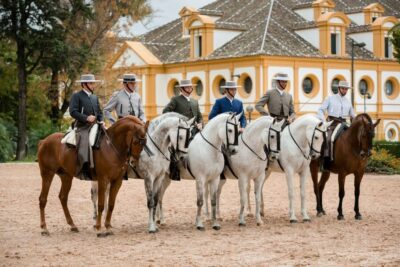
Jerez: Royal Andalusian School of Equestrian Art Admission
Read our review →
Cadiz: Andalusian Horses and Bulls Country Show
Read our review →
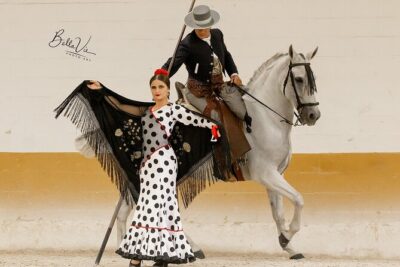
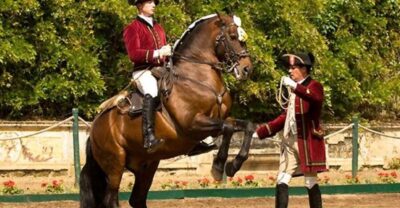
Lisbon: Morning of Equestrian Art with Lusitano Horses
Read our review →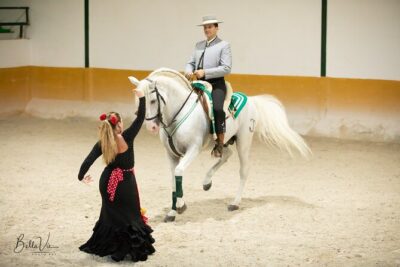
Andalusian Horses and Flamenco show with transportation
Read our review →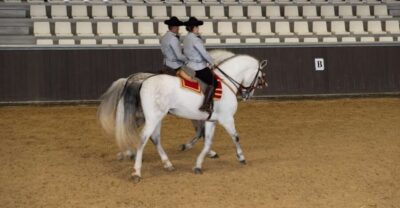
Seville: Horse’s Show Entry Ticket. Optional Stud Farm Visit
Read our review →Browse the lists this tour appears in