
Review · SPAIN
Jerez: Royal Andalusian School of Equestrian Art Admission
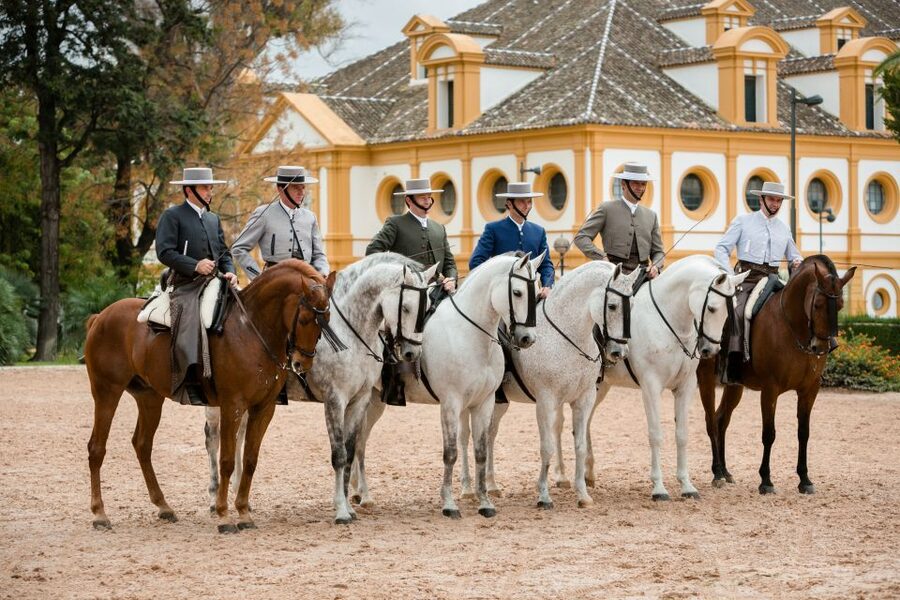
The real draw here is not a polished performance. It is seeing the working school behind Jerez’s famous equestrian shows, from the immaculate stables to the horses practicing in the arena. I like the close look at the tack room and saddlery, and I like that the $18 ticket also covers the palace, horse museum, gardens, and carriage collection. The main catch is timing: training and some working areas are not available on Saturdays, and language tours may begin later than expected.
You should allow more than the advertised two hours if you want to explore at an easy pace. The guides can add a lot, especially when they explain the horses’ care and training, but the opening video, house access, cafe, and daily schedule can change. Bring your ticket receipt on paper or your phone, and check exactly which option you bought, since a school visit is not the same thing as the full How the Andalusian Horses Dance show.
Key points to know before booking
- Watch real horse training: See horses and riders work in the outdoor rings and indoor arena, except on Saturdays.
- Go behind the stable doors: A guided visit includes the octagonal stables, tack room, and saddlery.
- Explore more than horses: Your admission includes the palace rooms, 11-room Museum of Equestrian Art, gardens, and carriage museum.
- Guides make the difference: English, Spanish, French, and German tours are available, with guides such as Javi, Elena, and Harry praised for clear explanations.
- Plan around the schedule: The audio-visual presentation is available until 11:00 AM, and some English tours may not begin until about 11:15 AM.
- Expect a working institution, not a petting zoo: You may get close to the horses, but touching them is not guaranteed.
Why the Royal School is worth your time
Jerez is closely tied to sherry, flamenco, and the Andalusian horse. At the Royal Andalusian School of Equestrian Art, those traditions meet in a formal institution devoted to classical riding and the care of horses.
For many people, the highlight is simple: watching a beautiful horse respond to small signals from its rider. You may see stallions being lunged, riders working through training exercises, or carriage driving in the arena. The point is not just spectacle. You get a look at the daily practice behind a finished show.
I especially like the balance of the visit. You are not limited to a stable tour, and you are not asked to spend two hours in a museum before seeing a horse. The route combines working facilities, historic rooms, gardens, training spaces, and transport equipment. That makes the $18 price strong value, even if you are only mildly interested in riding.
Horse lovers will get the most from the visit. Still, you do not need to know dressage to enjoy it. The palace, museum, architecture, and carriage collection give non-riders enough to see, while the guide helps explain what makes the horses and their movements special.
More Horse Shows in Spain:
- Jerez de la Frontera: Andalusian Horse Dance and Museums
★ 4.7 · 1,289 reviews - Cadiz: Andalusian Horses and Bulls Country Show
★ 4.6 · 189 reviews - Torremolinos: Spanish horse and flamenco show
★ 4.5 · 162 reviews
Starting at the reception center and gardens
Your visit begins at the school’s reception center. The audio-visual presentation on Andalusian equestrian art is available until 11:00 AM, so an early start may give you the best chance to see it.
Do not rush through the reception area. It sets up the story of the school and gives you useful context before you reach the horses. One past visit was affected when the introductory video was canceled without notice, so treat it as a helpful extra rather than the foundation of the whole experience.
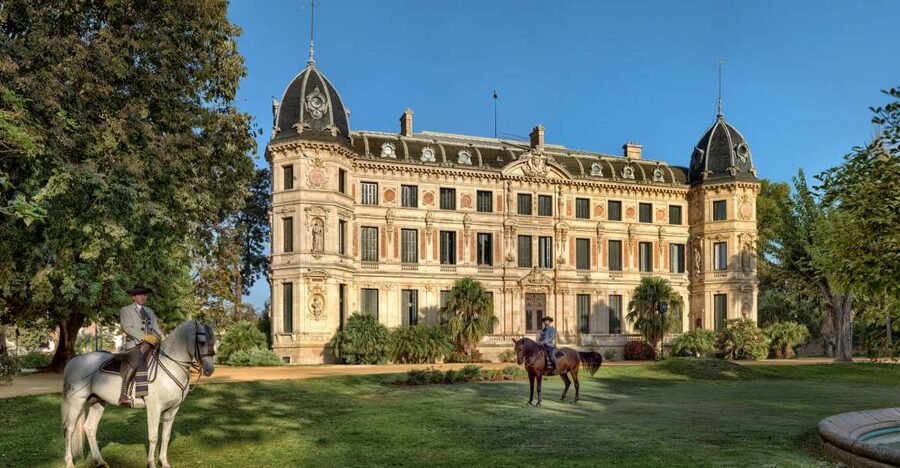
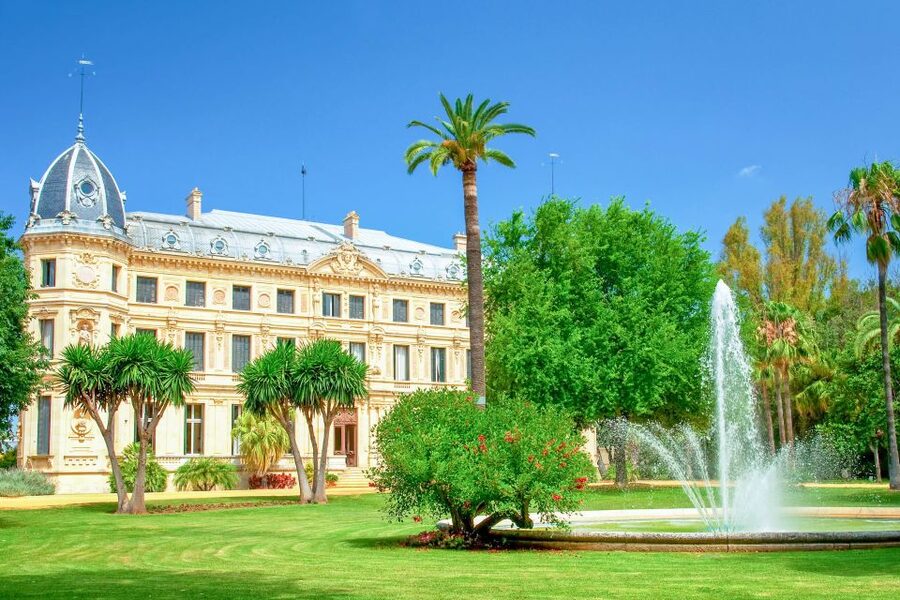
From reception, you enter the gardens. They are formal and spacious, with exotic plants and a large central fountain. The water jets draw your eye toward the palace, and the gardens provide a pleasant pause between indoor sections.
This is also where the setting begins to feel different from an ordinary stable yard. The school is both a working training center and a grand public institution. The garden approach, palace facade, and carefully kept grounds make that clear.
The Garnier palace and its original rooms
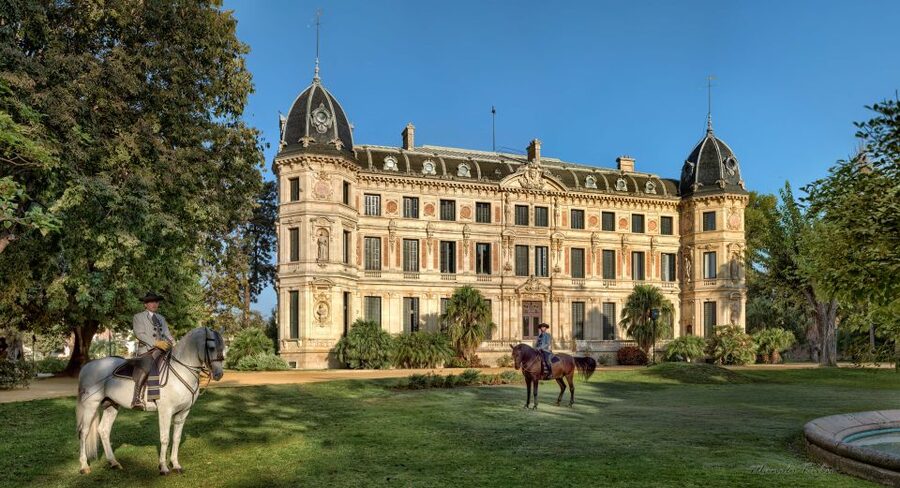
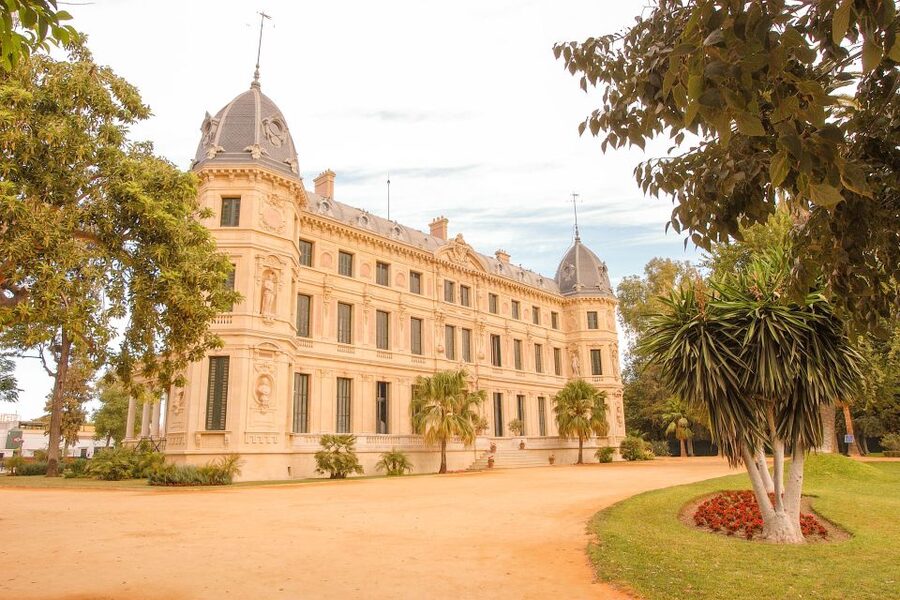
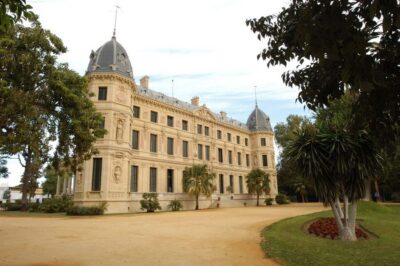
The palace rises beyond the fountain in a 19th-century design by Charles Garnier. You can see the ground-floor halls decorated in their original style, which adds a layer of history and ceremony to the visit.
The palace is not the main reason to book this experience, but it helps explain why the school feels more like a cultural foundation than a sports facility. After watching horses train, you move through rooms designed for formal presentation and public prestige.
Access to the house can vary. One visit found part of it closed for filming, so do not assume every room will always be open. The management also reserves the right to change the program. Even with a change, the stables, museums, and training areas provide the core of the visit.
Eleven rooms on Andalusian horse culture
In the basement, the Museum of Equestrian Art occupies 11 rooms. It covers the origins and development of equestrian art in Andalusia, along with the role of the horse in the region.
The museum is particularly useful if you arrive without much background. Displays explain the school’s story, the history of horses in Andalusia, and the movements used in equestrian performances. Interactive exhibits and video material help break up the reading.
Not every display is guaranteed to work. Some video screens have been reported out of service, but the museum still gives you a solid explanation of the subject. I would treat it as a worthwhile companion to the live training, not a substitute for it.
The museum also helps you notice details later in the tour. Once you understand the relationship between rider, harness, horse, and movement, the tack room and training arena become much more than a quick look behind a door.
More horseback rides around Spain:
- El Salobre: Horse Riding Adventure with Transfer Options
★ 4.5 · 2,034 reviews - Mallorca: Horseback Riding Experience with Food Options
★ 4.6 · 1,424 reviews - Jerez: Yeguada de la Cartuja Carthusian Horses Tour
★ 4.8 · 970 reviews - Tenerife: Horseback Ride with Instructor
★ 4.4 · 836 reviews
The saddlery and the craft behind the show
The route continues to the saddlery, where harnesses are made and repaired by the master harness maker and apprentices. This is one of the most distinctive parts of the visit because it shows the labor behind the elegant performances.
A finished show can make riding look effortless. The saddlery reminds you that the equipment requires regular attention, skill, and careful storage. You can see where working harnesses are maintained rather than simply displayed as historic objects.
This area is not available on Saturdays, so avoid that day if the working side of the school matters to you. The same Saturday restriction applies to watching the training and other active demonstrations described in the visit.
The tack room and octagonal stables
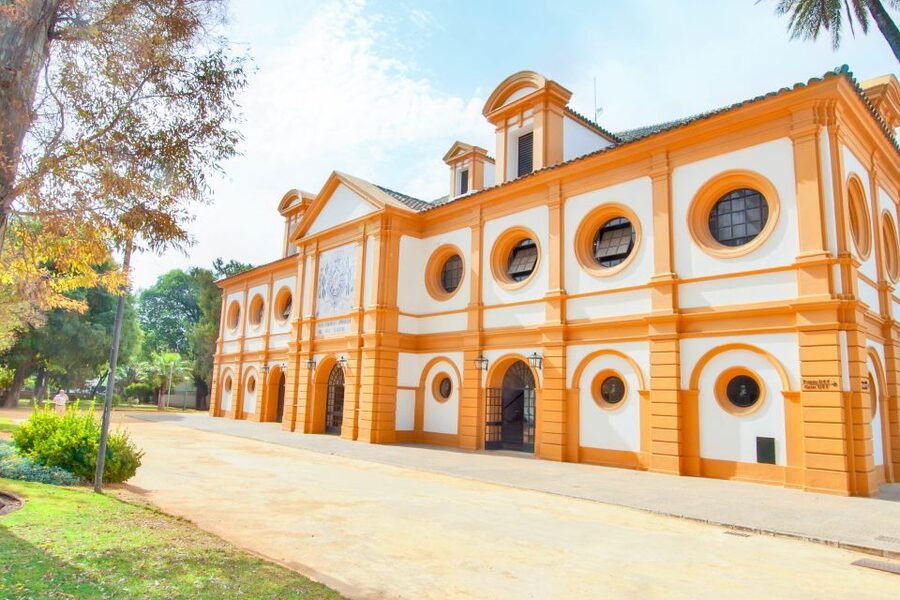
The stables form an octagonal complex, with the tack room at the center. This layout gives the school a memorable architectural feature while keeping the equipment used for daily work close to the horses and riders.
The tack room holds the harnesses used in training and performances. Some equipment is kept in a humidity-controlled environment, an important detail if you want to understand the level of care given to leather and other materials.
The stable tour is guided, not an area for wandering alone. That is a good arrangement for both safety and explanation. A guide can point out how the equipment is organized and answer questions about the horses’ care.
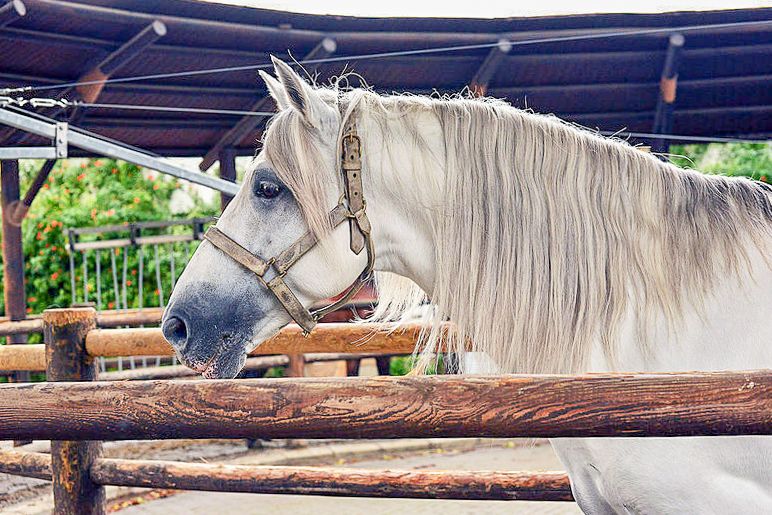
You may see the school’s most emblematic horses in their stalls. The experience can bring you quite close, and some people have been able to pat the horses. Do not count on hands-on contact, though. The school is showing you trained animals in their working home, not offering a petting session.
Seeing the horses train in the arena
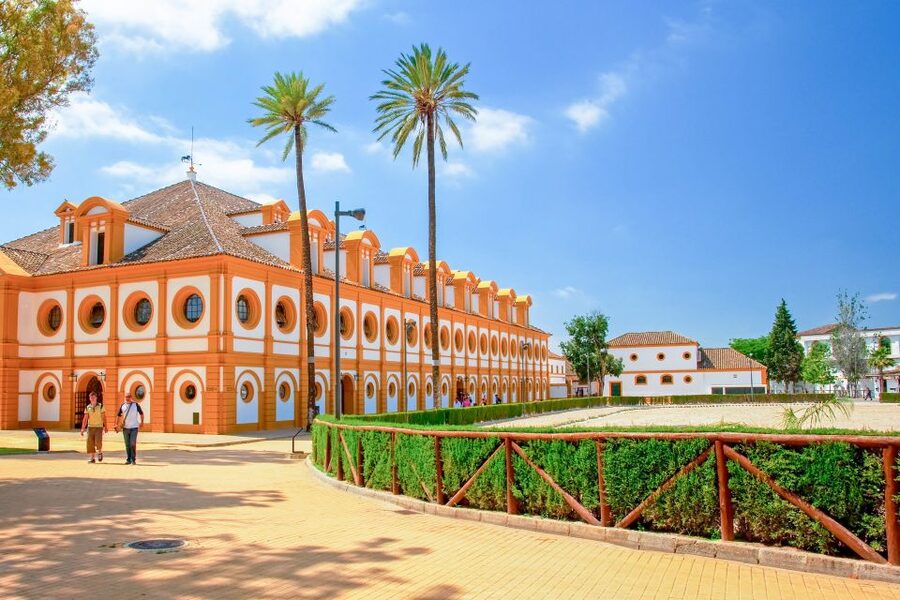
The outdoor exercise rings and indoor arena are the heart of the visit. The indoor arena follows an Andalusian design and can seat 1,600 people. During normal training, you may watch riders and horses work through exercises rather than a full theatrical performance.
That distinction matters when you choose your ticket. Training can be fascinating because you see repetition, correction, and preparation. It is less polished than the formal show, and that is exactly why it gives you a better sense of the daily work.
You may see stallions being lunged, carriage driving, or riders practicing dressage movements. The horses are impressive, but pay attention to the riders as well. The control often comes through tiny shifts in posture and rein pressure, not dramatic gestures.
Photography restrictions may apply inside the arena. One past visit allowed people to watch training but not take pictures in that space. Follow the staff’s instructions rather than assuming a camera or phone is acceptable.
Training is not offered on Saturdays according to the supplied schedule. If watching the horses work is your main goal, choose another day and confirm the current time before setting out.
The carriage museum closes the route
The carriage museum is the final planned stop. Its collection includes carriages, horses, harnesses, and equestrian costumes.
This section gives the visit a wider frame. The school is not only about mounted riding. Horse-drawn transport, formal clothing, and the equipment used in ceremonies all belong to Andalusia’s equestrian tradition.
Heat can affect how much energy you have for the last section. One visitor skipped the carriage museum on a very hot day after seeing the stables and main museum. If you are visiting in summer, start early and save enough time for this final collection.
The cafe may have limited food and drink options or may be closed, depending on the day and opening hours. Do not build your schedule around a long cafe stop. It is safer to arrive prepared and treat any refreshments as a bonus.
How long to allow and when to go
The stated duration is two hours, but you may spend closer to four hours if you arrive early, watch training, take the guided stable tour, and explore the museums and grounds at a relaxed pace.
Morning planning takes a little care. The audio-visual presentation is available until 11:00 AM, while an English-language tour may not begin until around 11:15 AM on some schedules. That can create a gap, but the gardens, palace areas, and museum help fill it.
Schedules can shift, and the management can alter the program. Check the starting time for your chosen language and arrive with enough margin to exchange or collect tickets. Online admission does not always mean walking straight through. You may still need to show your printed receipt or mobile confirmation at the ticket office.
If you buy a discounted ticket, bring proof of eligibility. Without the required document, you may have to pay the difference to the full ticket price if standard tickets are still available.
The school is wheelchair accessible. Entry is not permitted with bottles, cans, animals, or other items management considers unsuitable.
Guides, languages, and the value of the explanation
A guide is important here. You can see a horse without help, but you may miss why the tack room is arranged as it is, what the training exercises mean, or how the school’s different facilities fit together.
Tours are offered in Spanish, English, French, and German. Guides have included Javi, Elena, and Harry, and the strongest guiding adds practical detail rather than simply leading you from room to room.
Language quality can vary by departure and group. One past English tour had a guide who was difficult to hear, while other visits praised clear English and careful answers to questions. If you are placed with a large group, stay close to the guide and ask for clarification when needed.
The guide is a school employee in at least some departures. That can be an advantage because the explanation comes from someone connected with the institution and its daily work. It also means the tone may be more formal and focused on the school than on broad tourism.
Admission value and what this ticket does not include
At about $18 per person, this is a good-value admission for the amount of ground covered. You receive access to the school facilities, gardens, palace areas, Museum of Equestrian Art, training spaces when scheduled, stables, tack room, and carriage museum.
The price does not mean you are automatically buying a ticket to the full horse show. A stable and training visit lets you see preparation and practice. The formal performance is a separate product, so read the title and inclusions carefully before booking.
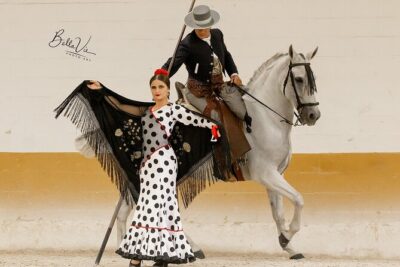
I would choose this admission if you want access behind the scenes, have a limited budget, or cannot fit the full show into your schedule. I would choose the performance instead, or in addition, if your main goal is a finished theatrical presentation with music, costumes, and choreographed movements.
Free cancellation up to 24 hours before the visit and a reserve-now, pay-later option make planning easier. Those policies do not solve the schedule issue, though. You still need to check the day, language, and whether training is planned.
Who should book this Jerez experience
This visit is best for:
- Horse lovers and anyone curious about classical riding
- People interested in Andalusian culture and working crafts
- Families who want a mix of animals, gardens, museums, and architecture
- Visitors who prefer a behind-the-scenes look to a formal performance
- Anyone looking for a strong-value activity in Jerez
It may be less satisfying if you want guaranteed horse contact, a full show, or a fixed program with no changes. You also need patience if the language departure starts later or the introductory video is unavailable.
The school is clean, orderly, and carefully maintained, but it is still an active institution. Horses may be training at different times, rooms may close for operational reasons, and the cafe may not be ready when you want a drink.
Should you book it?
Book this tour if you want to understand how Jerez’s famous equestrian performances are made. The combination of live training, stables, tack room, saddlery, palace, gardens, and museums gives you much more than a quick look at horses.
Choose a weekday rather than Saturday if the working facilities and training matter most. Arrive early enough to check the audio-visual schedule, confirm your language, and avoid a rushed museum visit.
At $18, the admission offers excellent value, especially for horse lovers. Just buy it for the school visit, not by mistake as a substitute for the separate full performance.
FAQ
How long does the Royal Andalusian School visit last?
The stated duration is two hours. You may spend longer if you watch training and explore the gardens, palace, museums, stables, and carriage collection at a relaxed pace.
Is horse training included with admission?
Horse training is included when it is scheduled, except on Saturdays. The program can change, so check the current timetable before you go.
Can I visit on a Saturday?
You can visit the school on a Saturday, but the listed horse training and saddlery activities are not available that day.
Is the full horse show included?
No. This admission covers the school facilities, training access when scheduled, museums, gardens, palace areas, stables, and related areas. The formal performance is a separate booking.
What languages are available for the guided tour?
Guided tours are available in Spanish, English, French, and German.
Is the school wheelchair accessible?
Yes, the activity is listed as wheelchair accessible.
Do I need to bring my booking confirmation?
Yes. You must show your printed receipt or mobile confirmation at the ticket office.
What do I need for a discounted ticket?
Bring proof that you qualify for the discount. If you cannot show the required document, you may need to pay the difference to the full standard price, if tickets remain available.
Can I bring bottles, cans, animals, or other items?
No. Bottles, cans, animals, and any objects management considers unsuitable are not allowed on the grounds.
New to the stable around Spain
- Horseback Riding in Cala Mitjana, Menorca, Spain★ 5.0 · 36 reviews
- Andalucia Bull and Horse Farm and Ronda Private Tour from Malaga★ 5.0 · 2 reviews
- 3-Hour Beach Horse Riding to Discover the Beauty of Alcudia Bay★ 4.0 · 20 reviews
- Horse Riding Madrid Natural Park (long Trip)★ 4.5 · 18 reviews
- Malaga – guided horseback riding★ 4.5 · 8 reviews
- Horseback Riding in Randa Valleys, Mallorca, Spain★ 5.0 · 3 reviews
- Horse and Flamenco Show in Malaga with Dinner★ 4.0 · 26 reviews
- Horse Riding Madrid Natural Park Private trip★ 5.0 · 2 reviews
Horse Shows, compared.
Jerez de la Frontera: Andalusian Horse Dance and Museums
Read our review →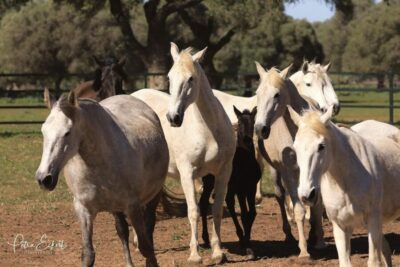
Cadiz: Andalusian Horses and Bulls Country Show
Read our review →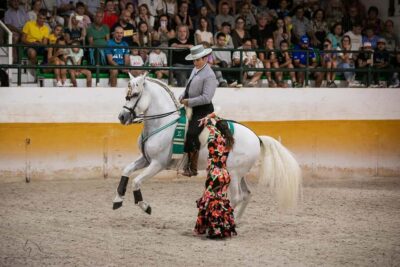
Lisbon: Morning of Equestrian Art with Lusitano Horses
Read our review →
Andalusian Horses and Flamenco show with transportation
Read our review →
Seville: Horse’s Show Entry Ticket. Optional Stud Farm Visit
Read our review →Browse the lists this tour appears in