
Review · LISBON
Lisbon: Morning of Equestrian Art with Lusitano Horses
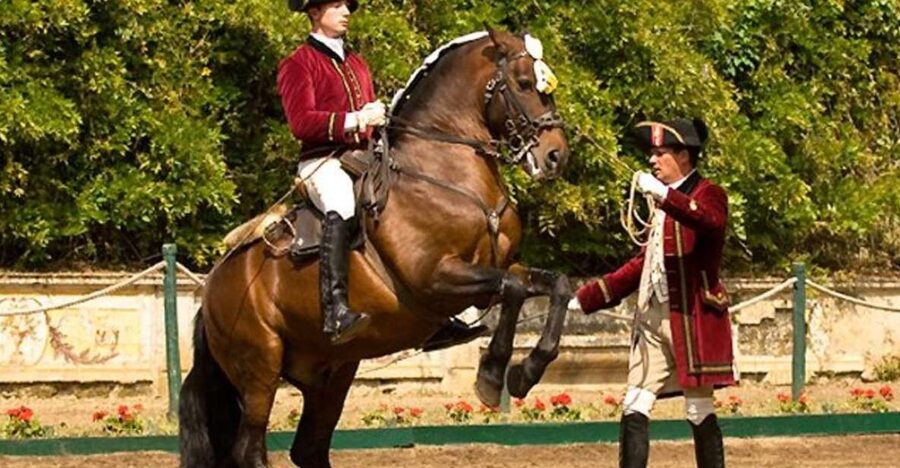
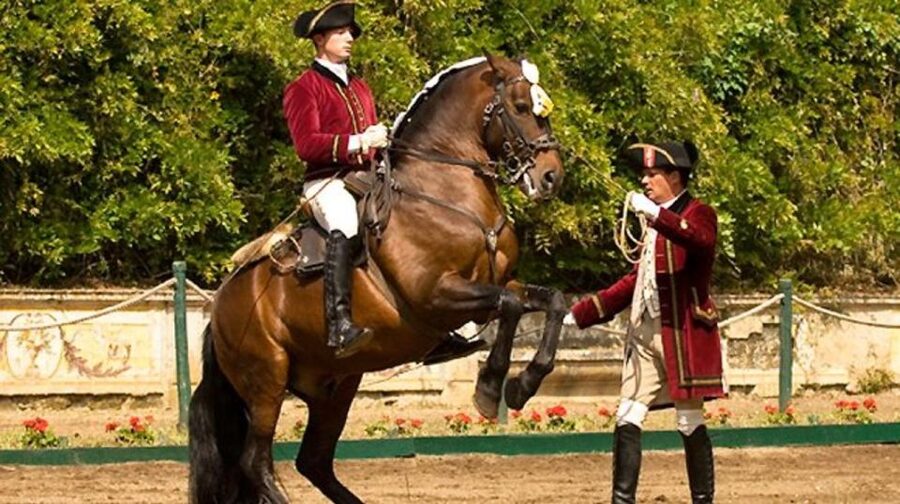
The most compelling part of this Lisbon visit is the chance to see Lusitano horses in training, not only during a polished gala performance. Riders in period costume work through warm-ups and demanding exercises while the horses move to period music, giving you a close look at a Portuguese art form that has survived from the royal court.
I like the access to the behind-the-scenes care at the Henrique Calado Riding Ring, and I like that the $17 price includes entry, the daily training, and an audio guide. The main caution is simple: this is a training morning, not a full theatrical show. If repeated exercises bore you, two hours may feel long.
Key points at a glance
- Watch Alter Real Lusitano horses train: See horses from Portugal’s famous stud farm work through warm-ups and advanced exercises.
- See riders in 18th-century costume: Period clothing and music create the feel of a royal court rehearsal.
- Visit the Nora Patio: Photography is allowed here without flash, giving you a chance to record part of the experience.
- Get a look at horse care: Handlers show how the horses are cared for before the riding work begins.
- Use an audio guide: English, French, and Portuguese audio support the visit, though you need to bring headphones.
- Plan for a two-hour morning: The full activity runs from 11 a.m. to 1 p.m., with 11 a.m. to 12:30 p.m. noted as the best window.
Why Lusitano horses make this more than a riding demonstration
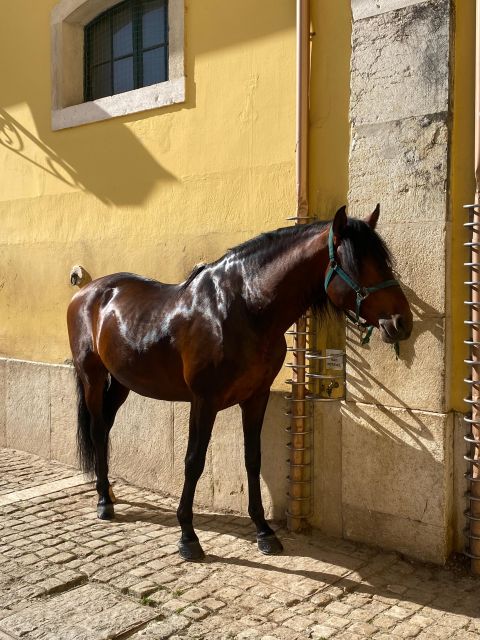
The Lusitano is Portugal’s traditional horse, and this experience places the breed within the country’s equestrian culture. You are not simply watching horses walk, trot, and turn. The riders work on control, balance, obedience, and precise movement, all of which prepare the horses for the more formal gala displays of the Portuguese School of Equestrian Art.
The horses come from the Alter Real Stud Farm, an important detail for anyone interested in Portuguese horse breeding. The visit gives you a chance to see these animals during ordinary preparation, when the focus is on rhythm, health, and physical limits rather than only on spectacle.
That difference matters. A finished performance can look effortless, but this morning shows some of the work behind it. You see exercises repeated and refined, along with the careful pace needed to train a horse for difficult movements.
I would compare the experience to watching a rehearsal at a classical dance school. You may see elegant steps, but you may also see pauses, corrections, and familiar sequences repeated. The value comes from understanding the craft, not from expecting a nonstop show.
More Horse Shows in Portugal:
- Jerez de la Frontera: Andalusian Horse Dance and Museums
★ 4.7 · 1,289 reviews - Jerez: Royal Andalusian School of Equestrian Art Admission
★ 4.6 · 882 reviews - Cadiz: Andalusian Horses and Bulls Country Show
★ 4.6 · 189 reviews
Arriving at the Portuguese School of Equestrian Art
Your visit takes place at the Henrique Calado Riding Ring and the Nora Patio. The activity is listed as valid for one day, with the main program taking place between 11 a.m. and 1 p.m.
The timing makes this easy to fit into a morning in Lisbon, but you should avoid treating it as a quick 30-minute stop. The full visit can take about two hours. The best period is said to be from 11 a.m. to 12:30 p.m., so arriving for the opening time gives you the strongest chance of seeing the complete sequence of activities.
There is one booking detail that deserves close attention. Your GetYourGuide voucher or QR code is not the entry ticket. You must show the separate Book N Tour ticket to reception staff. After booking, check your email for another message with instructions for downloading the ticket and audio guide. Look in your spam folder if it does not arrive.
This is the kind of small detail that can turn a smooth visit into a frustrating one. Keep the correct ticket ready on your phone, and make sure the provider has at least one working WhatsApp number or email address for contact.
The host or greeter can assist in English or Portuguese. The audio guide is available in English, French, and Portuguese.
The Nora Patio and the first look behind the scenes
The Nora Patio offers a more open part of the visit and a chance to see some of the setting before the riding work begins. Here you can watch handlers care for the horses and gain a better sense of the preparation involved.
The care work is not a side issue. It helps explain the school’s approach, where the horse’s health and natural rhythm guide the training. If you know little about classical riding, this is a useful introduction because it shows that the performance begins long before the horse enters the ring.
You may take photographs and videos in the Nora Patio, but flash is not allowed. Bring your phone or camera if recording this part matters to you, but be ready to put it away once you enter the riding ring.
The patio is also a good place to use the audio guide. Since the visit includes a cultural story as well as a horse demonstration, the commentary can help connect the setting, the clothing, the music, and the exercises.
You need to bring your own headphones. The activity does not include them. You also need a charged smartphone and internet access, so download or open the required material before you arrive if possible.
Watching the warm-up at Henrique Calado Riding Ring
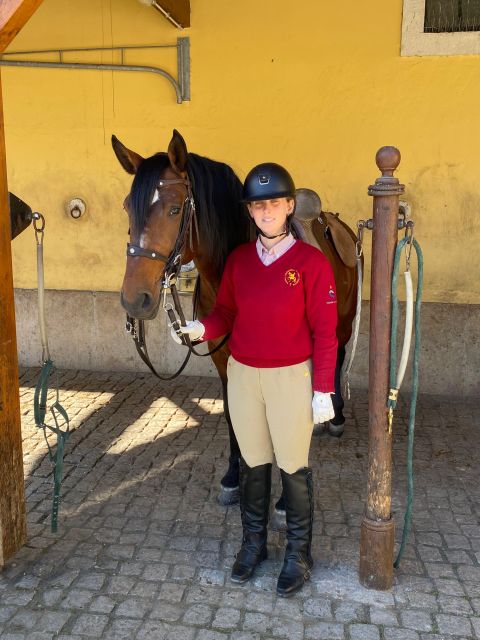
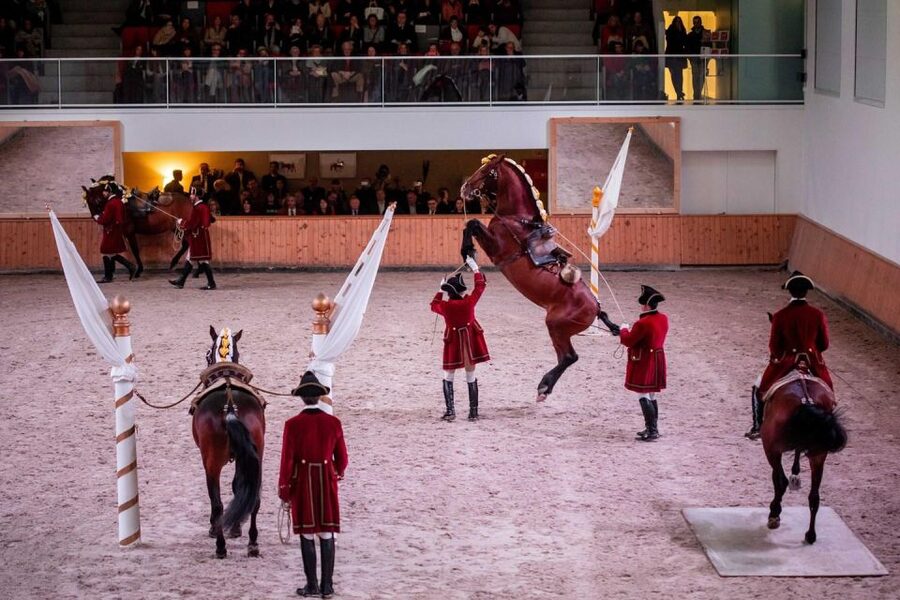
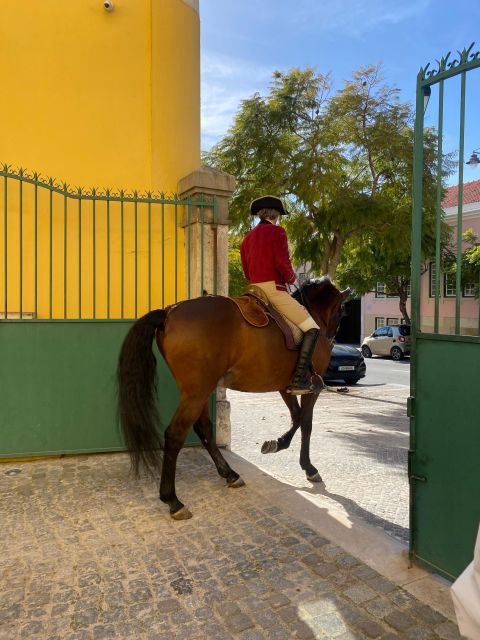
The main event is the daily training at the Henrique Calado Riding Ring. Riders dressed in period costume guide the Lusitano horses through warm-up work and resourcefulness exercises.
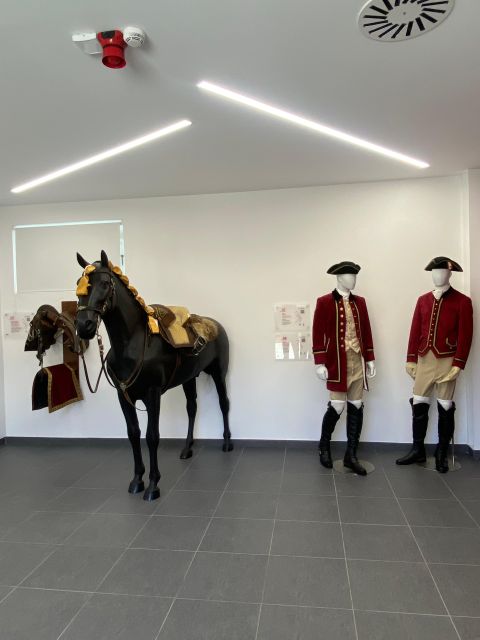
The costumes are not just decoration. Along with the period music, they help recreate the atmosphere of an 18th-century court. You get a sense of how Portuguese equestrian art links horsemanship with ceremony, music, dress, and court culture.
The warm-up is also where you should set your expectations. This is not presented as a single dramatic performance with a story and a grand finale. It is a working session. Some exercises may repeat, and some sections may look subtle if you are unfamiliar with dressage or classical riding.
That can be fascinating if you enjoy horses or want to understand how skill is built. The riders must stay attentive to each horse, respecting its pace and physical needs. You are watching an exacting partnership rather than a collection of tricks.
Photography and video are not allowed inside the Henrique Calado Riding Ring. This rule is stricter than the policy in the Nora Patio, so do not plan to film the riding session. The restriction also lets you focus on the movements without phones raised throughout the ring.
One weak point is the possibility of repetition. A visitor who expected a lively show found the pre-training and training too similar and left early. I would take that as useful advice: book this if you want to observe a working equestrian school, not if you need constant action.
More horseback rides around Portugal:
- Algarve: 1-Hour Carrapateira Horseback Riding Tour
★ 5.0 · 295 reviews - Algarve – Exclusive horseriding in Portimao (no experience required)
★ 5.0 · 217 reviews - From Albufeira: Horse Riding Tour with Pickup
★ 4.7 · 202 reviews - Horse Riding on the Beach
★ 4.5 · 171 reviews
Period exercises, music, and the making of a gala show
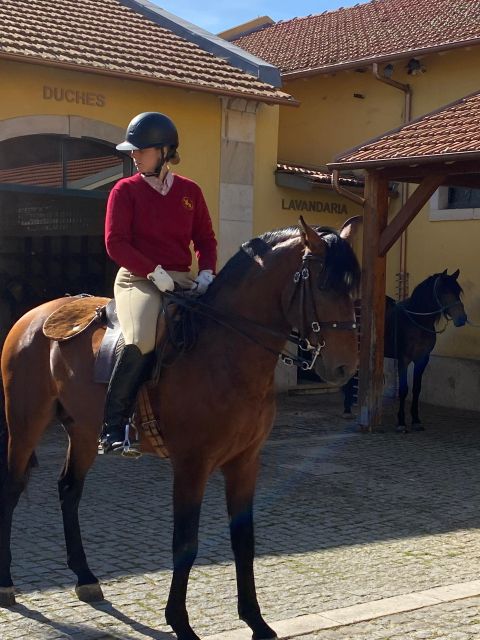
After the warm-up, the riders continue with rehearsals of complex exercises and choreographies. These movements are connected to the high-level gala show of the Portuguese School of Equestrian Art.
The word rehearsal is important. The horses and riders are refining skills that later appear in a more finished setting. You may notice the difference between basic preparation and formal choreography, but the activity does not promise a separate full gala presentation.
The period music helps hold the pieces together. It gives the riding a measured, courtly feel and makes the session easier to follow even if you do not know the names of the exercises.
The audio guide adds another layer, especially for first-time visitors. You can follow the explanation in English, French, or Portuguese. Still, the experience is largely visual, so you do not need specialist horse knowledge to appreciate it. Watch the riders’ posture, the horses’ response, and the steady increase in complexity.
I like this format because it gives you context that a short photo stop would miss. You see how the horses are prepared and how the rider’s work develops. At the same time, the slow pace will suit some people far better than others.
What the $17 price really includes
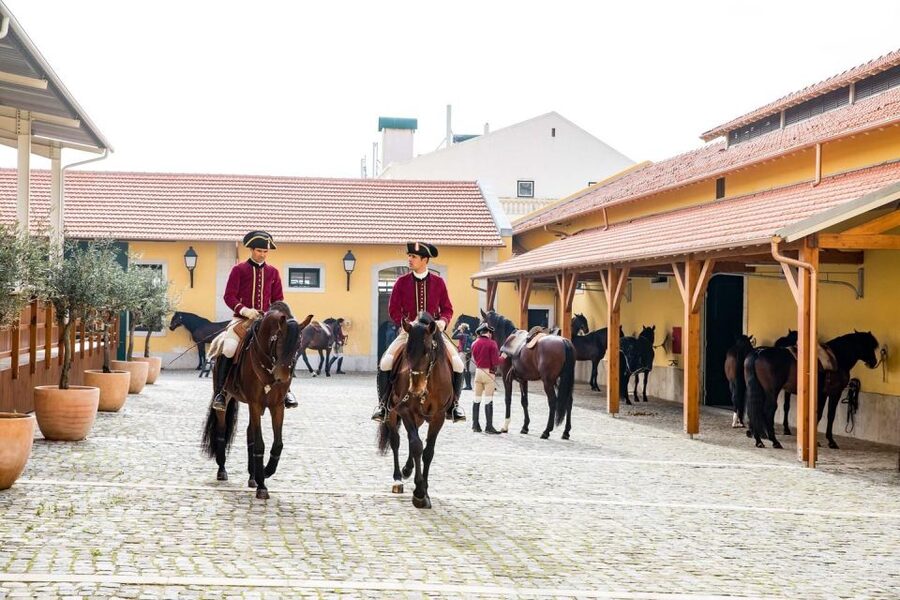
At $17 per person, this is reasonably priced for a focused cultural visit. Your fee covers entry to the Portuguese School of Equestrian Art, access to the daily Lusitano training, and the audio guide.
The value is strongest for anyone already interested in horses, Portuguese traditions, or unusual cultural experiences. You receive more than access to a stable, but less than a large-scale performance with a full production.
Transport is not included, so you must arrange your own way to the venue. Food and drinks are also excluded. That is not a major problem for a morning activity, but you should not expect refreshments or a meal as part of the visit.
The price also does not cover headphones. Add a pair to your day bag, along with comfortable shoes. The visit includes time in riding and stable areas, so comfortable footwear makes more sense than dress shoes.
For a couple, family, or small group, the low admission price makes this an easy addition to a Lisbon schedule. The question is not mainly cost. It is interest. If horses hold your attention, the price is good. If you want a fast sightseeing stop, you may find the time commitment less worthwhile.
Who will enjoy this morning most
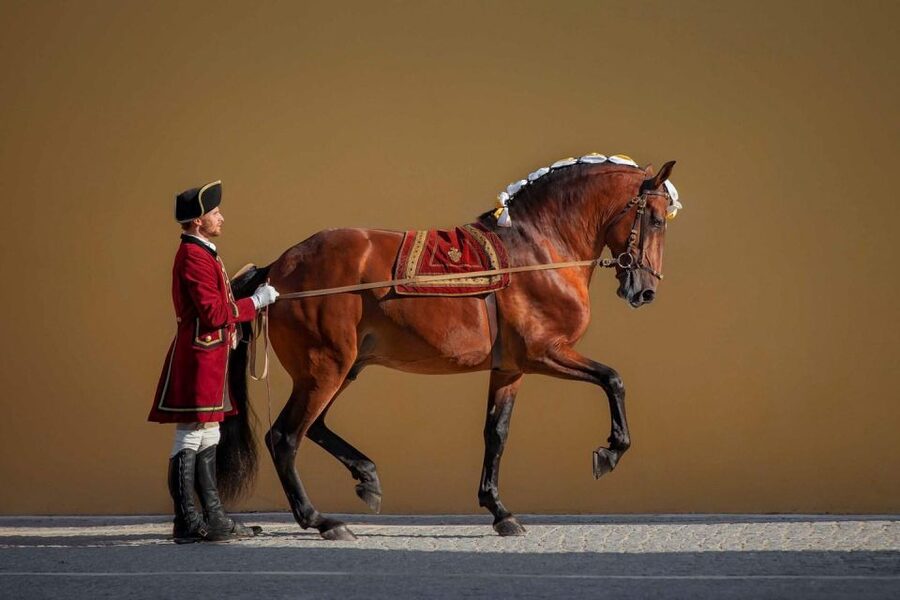
I would recommend this experience to anyone who enjoys working with horses, not only watching polished shows. It suits people who want to see training methods, horse care, and the connection between Portuguese tradition and classical riding.
It is also a good choice if you have already seen Lisbon’s main monuments and want something different. The period costumes and music give the visit a strong local character, while the audio guide makes it easier to follow without booking a private expert.
Families may enjoy it if children are patient and already interested in animals. The horses are the focus, but the session is not designed as a children’s entertainment show. Younger children who need rapid changes of scene may lose interest during repeated exercises.
The activity is wheelchair accessible, which makes it practical for many visitors. You still need to check your own comfort with the length of the visit and the available seating or viewing arrangements, since the supplied details do not describe those features.
This is less suitable if you expect to photograph the horses in action. You can take photos and videos in the Nora Patio without flash, but photography is not permitted in the riding ring.
Practical advice before you go
Wear comfortable shoes and bring a charged smartphone with internet access. Pack your own headphones for the audio guide, and make sure you know where the separate ticket email is stored.
Use the correct entry document. Reception needs the Book N Tour ticket, not the GetYourGuide QR code or voucher. If you have booked through a third-party platform, wait for the separate instructions from Book N Tour and check your spam folder.
Arrive prepared for a morning that may last close to two hours. The stated activity period is 11 a.m. to 1 p.m., but 11 a.m. to 12:30 p.m. is identified as the best time to visit.
Smoking is not allowed. Flash photography is not allowed, and photography inside the riding ring is prohibited. Keep your phone available for the audio guide, but expect to put it away during the central riding session.
Free cancellation is available up to 24 hours before the activity for a full refund. Check the available starting time when booking, since the exact schedule can vary.
Should you book the Lusitano horse training?
Book this morning if you want an authentic look at Portuguese equestrian culture and you are happy to watch training rather than a finished gala show. The access to horse care, the Alter Real Lusitanos, period costumes, music, and the audio guide gives the visit real substance for $17.
Skip it if you need constant action, want unrestricted photography, or have little patience for repeated exercises. The strongest match is a horse lover, a culture-minded visitor, or anyone looking for a quieter Lisbon experience with a clear Portuguese identity.
FAQ
How long does the Lusitano horse experience last?
The activity takes place from 11 a.m. to 1 p.m. The period from 11 a.m. to 12:30 p.m. is identified as the best time to visit.
What is included in the ticket?
The ticket includes entry to the Portuguese School of Equestrian Art, access to the daily training of Lusitano horses from the Alter Real Stud Farm, and an audio guide.
In which languages is the audio guide available?
The audio guide is available in English, French, and Portuguese.
Do I need to bring headphones?
Yes. Headphones are not included, so bring your own. You should also bring a charged smartphone and internet access.
Can I take photographs during the visit?
Photography and video are allowed in the Nora Patio without flash. Photography is not allowed inside the Henrique Calado Riding Ring, and flash photography is prohibited.
What ticket should I show at the entrance?
Show the separate Book N Tour ticket to reception staff. The GetYourGuide QR code or voucher is not the entry ticket. After booking, check your email, including the spam folder, for instructions on downloading the correct ticket and audio guide.
New to the stable around Portugal
- Horse Riding Tour on the Beach Lisbon region★ 4.5 · 3 reviews
- Setubal & Comporta Trip with Horseback Riding from Lisbon★ 4.5 · 38 reviews
- Horse Riding on the Beach with private transfer from Lisbon★ 4.5 · 27 reviews
- Horse Sanctuary: A nature walk with Rescued Horses by your side★ 4.5 · 27 reviews
- Lusitano Trail – Horseback riding for beginners★ 4.5 · 7 reviews
- Horse Riding in Aveiro – Ílhavo★ 5.0 · 3 reviews
- Horse Riding in Portugal – Picadero Kids★ 5.0 · 11 reviews
- From Albufeira: Half-Day Hidden Gems & Horse Riding Tour★ 4.5 · 25 reviews
Horse Shows, compared.
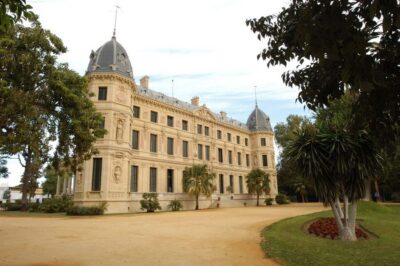
Jerez de la Frontera: Andalusian Horse Dance and Museums
Read our review →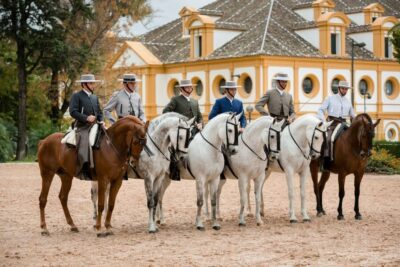
Jerez: Royal Andalusian School of Equestrian Art Admission
Read our review →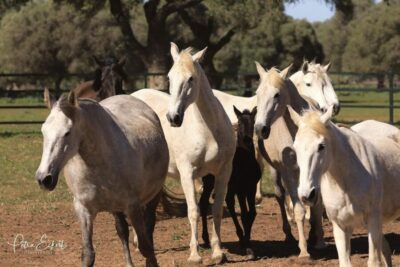
Cadiz: Andalusian Horses and Bulls Country Show
Read our review →
Andalusian Horses and Flamenco show with transportation
Read our review →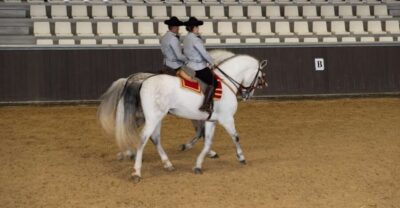
Seville: Horse’s Show Entry Ticket. Optional Stud Farm Visit
Read our review →Browse the lists this tour appears in